Custom Carbon Fiber Parts

Custom Carbon Fiber Parts are engineered to meet application-specific strength, stiffness, and weight targets where dimensional accuracy and repeatability matter. At iKabon, we manufacture CNC-machined carbon fiber components for engineers and procurement teams who require predictable machining behavior and clear design-for-manufacturability feedback.

From prototyping to repeat production, we work directly from customer drawings and functional requirements to deliver carbon fiber parts that are manufacturable, inspectable, and suitable for global shipment.

CNC Machining Capabilities for Carbon Fiber Components

  • CNC cutting and routing for flat and contoured profiles
  • Precision drilling and hole pattern machining for assemblies
  • Countersink and counterbore features where functionally required
  • Pockets and weight-reduction features on plates and panels
  • Application-dependent edge finishing and deburring

Carbon fiber machining involves real constraints, including delamination risk, fiber breakout, dust management, and heat-sensitive surface quality. Part geometry, feature placement, and fiber orientation are reviewed during engineering evaluation to ensure stable and repeatable results.

Carbon Fiber Materials & Layup Options

  • Fiber grades: T300 / T700 / T800 class carbon fiber
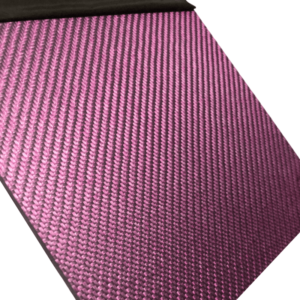
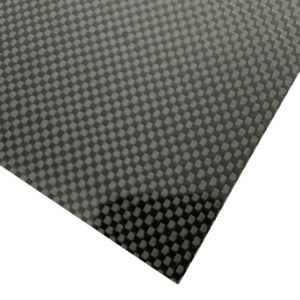
  • Woven fabrics: Twill and plain weave for balanced properties and visible surfaces
  • UD-based structures: For directional stiffness and load-driven designs
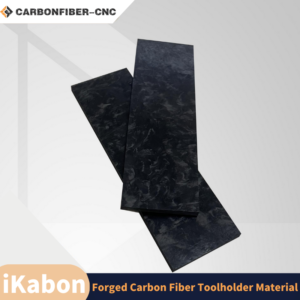
  • Forged carbon: For complex visual texture and quasi-isotropic appearance

If stiffness and load direction are critical, fiber orientation should be defined in the drawing. If surface appearance is critical, weave style, symmetry, and visible face requirements should be specified to avoid ambiguity during machining.

Design for Manufacturability (DFM) Considerations

CAD & Drawing Inputs

Drawings should clearly indicate finished dimensions, datum references, and critical-to-function features such as holes, interfaces, and mating surfaces.

Key Design Constraints in CFRP Machining

  • Hole size and edge distance relative to laminate thickness
  • Internal corner radii created by routing tools
  • Fiber direction relative to edges and load paths
  • Cosmetic expectations versus functional tolerances

When design constraints are unclear, engineering feedback is provided before production to minimize rework and scrap risk.

Tolerances, Inspection & Quality Control

Dimensional control for carbon fiber parts should align with function rather than applying uniform tolerances. Critical features should be identified on the drawing, while non-critical geometry may allow relaxed limits to optimize cost and lead time.

Inspection methods and verification steps are defined based on project stage and application requirements.

Prototype to Production Support

  • Prototype and low-volume builds for fit and functional validation
  • Repeat production runs with consistent CAM strategy and process control
  • Export-ready packaging and international logistics support

Applications & Material Selection (Engineering Mapping)

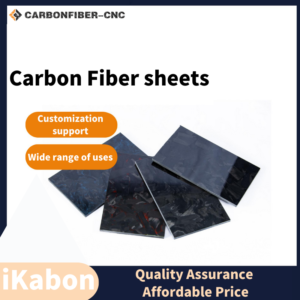
Below is a practical mapping between common applications and suitable carbon fiber forms (sheets/plates, forged laminates, tubes, blocks, and CNC-machined parts). If you share your drawing and functional requirements, we can recommend a practical laminate intent and machining approach before quotation.


Knife Handles & EDC Tools

Typical priorities are cosmetic consistency, edge durability after profiling, and clean CNC finish on contoured surfaces.

  • Define edge breaks (chamfers/radii) explicitly to reduce splintering.
  • Avoid countersinks too close to outer edges on thin laminates.

Related products: Forged Carbon Fiber Sheets, Carbon Fiber Sheets / Plates, Carbon Fiber Blocks

↑ Back to application overview


Watch Cases & Bezels

Watch components require high cosmetic standards and tight tolerance control at interfaces.

  • Define critical interfaces and tolerance zones.
  • Confirm finishing sequence if cosmetics are critical.

Related products: Forged Carbon Fiber Sheets, Carbon Fiber Sheets / Plates

↑ Back to application overview


Drone & UAV Structures

UAV structures prioritize stiffness-to-weight, repeatable thickness, and predictable in-plane behavior.

  • Maintain adequate edge distance for fasteners.
  • Avoid aggressive countersinks near edges.

Related products: Rigid Carbon Fiber Sheets, Carbon Fiber Tubes, CNC-machined Carbon Fiber Components

↑ Back to application overview


Robotics & Automation

Robotics assemblies require stiffness and dimensional stability to maintain positioning accuracy.

  • Define datums and true position clearly.
  • Minimize tolerance stack-up across assemblies.

Related products: Machining-grade Carbon Fiber Laminates, Carbon Fiber Blocks, CNC-machined Carbon Fiber Components

↑ Back to application overview


Industrial Tooling & Fixtures

Tooling plates and fixtures benefit from stable thickness and predictable machining behavior.

  • Specify internal corner radius limits.
  • Confirm clamping strategy for thin parts.

Related products: Carbon Fiber Sheets / Plates, Carbon Fiber Blocks, CNC-machined Carbon Fiber Components

↑ Back to application overview

RFQ Checklist

  • Drawing or CAD file with revision control
  • Material and laminate intent
  • Thickness and quantity
  • Critical dimensions and interfaces
  • Surface and edge finish expectations
  • Delivery destination and schedule targets

Engineering & Procurement

Request a Quote

Attach your drawing and highlight critical features to receive an engineering-reviewed quotation.

  • Fast quotation
  • Prototype-friendly
  • NDA available upon request